Sign in for a more personalised experience
Unlock a more personalised experience to discover special offers, suggested products and more!
Sign inDon’t have an account? Click to sign up today!blog
9/16/2026
Understanding book bands for reading and phonics programmes

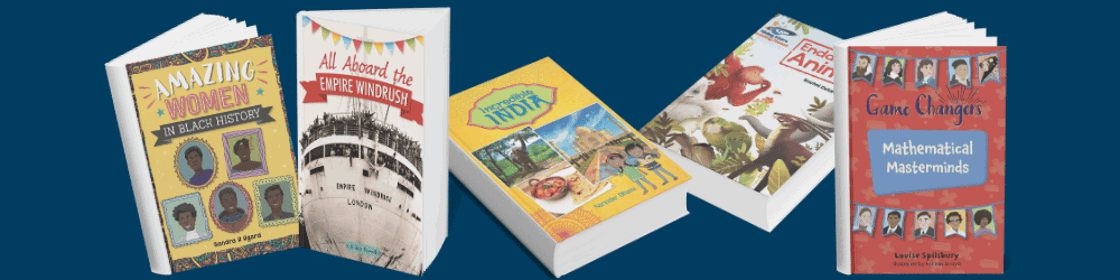
School reading programmes are organised into levels by band or colour. Learn more about what this means and which bands are suitable for each age group.
What are reading programme book bands?
Reading Planet is a whole-school reading programme for ages 3-11 made up of a series of engaging books created to help children learn to read. Organised into levels by band or colour, the books progress in finely graduated steps of difficulty according to:- amount of text per page
- layout of text
- overall length of book
- complexity of language
- factors such as sophistication of plot, characterisation etc
- phonics phase progression (for our decodable readers)
Why do we need book bands in reading programmes?
Children need to read books at the right level for their age and reading ability. If a book is too difficult, they will find it frustrating and may not want to read it. It could even put them off reading altogether. However, if a book is too easy, their reading ability won’t improve. Once a child can confidently and accurately read a number of books within a level, they can move onto the next one to further develop their reading skills.Using colour bands which are shown on the book’s cover and spine allows teachers and parents to easily identify the appropriateness of a book for a child’s reading level. Book bands also allow schools to put together books from different reading schemes. Books within the same band colour/level can be paired together as they are appropriate for the same reading age.
What is Reading Planet?
Reading Planet includes more than 800 fiction and non-fiction books across a variety of themes including:- traditional tales
- religious stories
- books about important figures from around the world
- thought-provoking and relevant topics that support the broader primary curriculum
- often untold stories that celebrate different communities
- characters and settings that represent all backgrounds
- inspirational real-life and fictional stories about people from different cultures, places and professions.
Why do we need different topics in reading programmes?
Having a wide range of books on different topics and genres helps children to develop their reading skills, gain confidence and learn more about the world around them.Reading Planet books take children from first learning to read in early years settings (age 3) to becoming fluent, confident readers by the end of Key Stage 2/Upper Primary (age 11). Above all, Reading Planet inspires a life-long love of reading among children from a young age.
What book bands are suitable for early years and reception (ages 3-6)?
- Lilac/Pink (Level 0-1B): wordless books or books with very short sentences focusing on picture clues and basic left-to-right tracking.
- Red/Yellow/Blue (Level 2A-4): introduces simple high-frequency words and short, repetitive sentence structures.
- Green/Orange (Level 5-6): longer sentences, simple punctuation, and early chapter or split-narrative structures.
What book bands are suitable for Key Stage 1/Lower Primary (ages 6-7)?
- Turquoise/Purple/Gold (Level 7-9): paragraphs grow denser and stories feature deeper character development, more complex plots and diverse layouts.
- White/Stars (Level 10-11): longer transitional chapter books that bridge early reading and fluent independent reading.
What book bands are suitable for Key Stage 2/Upper Primary (ages 7-11)?
For Key Stage 2 levels, Reading Planet uses space themed names for the colour bands, as there isn’t a standard used across reading programmes. However, they can still be matched to the levels used in other schemes, as follows:| Reading Planet band/level | Oxford/Pearson equivalent | Collins equivalent |
| Stars (Level 11) | Lime | Lime |
| Mercury (Level 12) | Brown | Copper |
| Venus (Level 13) | Brown | Topaz |
| Earth (Level 14) | Grey | Ruby |
| Mars (Level 15) | Grey | Emerald |
| Jupiter (Level 16) | Blue | Sapphire |
| Saturn (Level 17) | Blue/Red | Diamond |
| Supernova (Level 18) | Red+ | Pearl |
- Stars/Mercury/Venus/Earth/Mars/Jupiter (Level 11-16): advanced independent reading with sophisticated vocabulary, subtle humour, tension and fewer illustrations.
- Saturn/Supernova (Level 17-18): high-ability reading books handling complex themes supporting children to become independent readers.
Which Reading Planet strand is suitable for each age group?
These bands are grouped into the following Reading Planet strands:- Lift-Off/Lift-Off First Words (bands Lilac-Lilac+, ages 3-4): beautiful wordless and first words books.
- Rocket Phonics (bands Pink-Orange, ages 3-6): a Department for Education validated programme that raises phonics attainment and develops wider literacy skills.
- Comet Street Kids (bands Pink-White, ages 4-7): action packed series featuring diverse characters. With strong links to the wider curriculum.
- Galaxy (bands Pink-White, ages 4-7): curriculum-linked fiction and non-fiction including poetry, playscripts and mystery stories.
- Cosmos (bands Stars-Supernova, ages 7-11): a vibrant collection of books for shared, guided and independent reading.
- Astro (bands Stars/Turquoise-Supernova/Earth, ages 7-11): high interest/low reading level fiction and non-fiction for struggling and reluctant readers. Graphic novels, magazine-style non-fiction and mini-series fiction. Designed for independent, shared and guided reading, plus reading intervention.
“We’ve pretty much cast aside all other reading schemes now as we assessed our other reading books and book bands against Reading Planet and found that other schemes didn’t match up.”
– Ancaster Primary School
– Ancaster Primary School
Want to know more about Reading Planet?
Speak to your local consultant to discuss your requirements.
Fetching results
Fetching results
Hear from us
Curriculum changes. New materials. Price discounts and unmissable offers. We’ll make sure you don’t miss a thing with regular email updates, tailored by subject and age group.