Sign in for a more personalised experience
Unlock a more personalised experience to discover special offers, suggested products and more!
Sign inDon’t have an account? Click to sign up today!Are your class below age-related expectations? The report you need to know about.
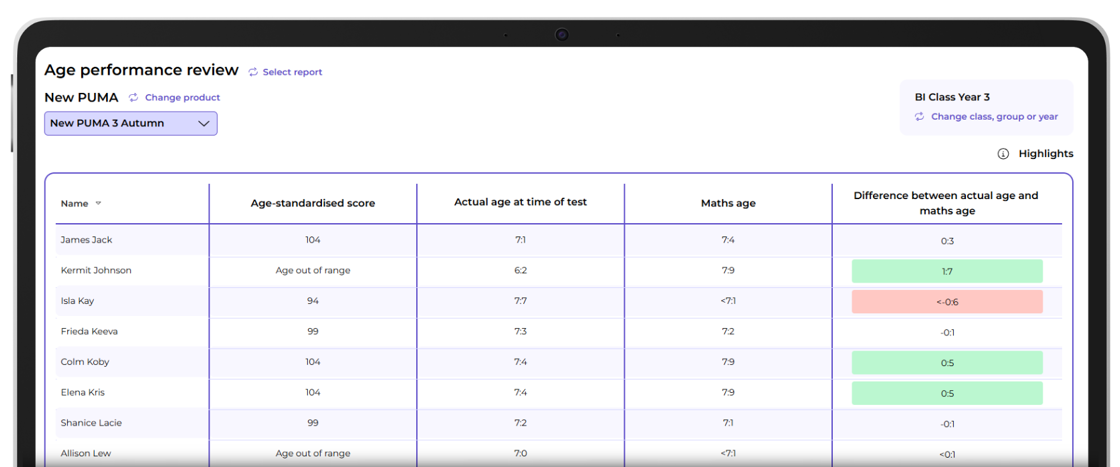
Explore how the Age Performance Review helps to pitch lessons correctly, compare age related expectations and inform planning decisions.
You’ll know the well-known phrase, Comparison is the thief of joy. As an assessor, you’ll also know this is incorrect.
When it comes to assessment data, as teachers, you’re forever comparing – some of us even enjoy it! But do you know where your class, cohort or year group compares to national age-related expectations?
The Age Performance Review Report in Boost Insights displays all the attainment comparisons you need to pitch your lessons correctly.
In this article, we’ll share how the Age Performance Review Report can:
-
Help you pitch lessons that stretch your pupils
-
Identify where your class measures against national age-related expectations
-
Highlight the difference between actual age and attainment age
-
Give you fuel for your Ofsted 3I’s
Pitch your lessons correctly
Pitching lessons and interventions at the right level can be challenging, especially for early career teachers (ECTs) or those teaching a class with a wide range of attainment levels.
That’s where the Age Performance Review report makes life easier! Since it focuses on one test and one subject at a time, even teachers who aren’t subject specialists can quickly pinpoint if a class or group is working below, above, or within national age-related expectations.
This clarity is invaluable when planning lessons that stretch higher achievers while giving extra support to those who need it. Giving you the tools and the assessment information to help you improve teaching and learning.
National age-related expectation comparison
It’s easy to assume your class is excelling because they’re engaged, but solid assessment data is what truly reveals strengths and areas for improvement.
Understanding where your class, cohort, or year group sits against national age-related expectations in a subject is key to making informed decisions, not just about teaching and learning but for curriculum design and for school groups to achieve MAT-wide consistency.
Subject leaders need access to useful assessment data to prioritise budget spending, ensure resources go where they’re needed most, and pinpoint CPD needs for staff.
Having the full picture of school assessment means smarter planning, better teaching, and, ultimately, stronger outcomes for pupils.
Actual age vs. Attainment age
By comparing actual age with their standardised score age and then their attainment age, teachers can clearly explain whether a child is below, above, or within age-related expectations.
This kind of data crunching is incredibly useful, but it can also be time-consuming, and with so many demands on teachers’ time, having this information immediately accessible is crucial.
When it comes to informing parents about a child’s progress, teachers need more than just a gut feeling – they need solid data. That’s why knowing the difference between a child’s actual age and their attainment age is so important.
That’s where Boost Insights comes in. It digitally collates all this data, giving teachers a clear breakdown of who needs keep-up or catch-up interventions to close learning gaps quickly and effectively.
No more sifting through endless spreadsheets – just instant, actionable insights.
"We need to communicate with parents and they understand ages more so than standardised scores. It’s powerful to talk to a parent about supporting their 11yr old child with reading at home if we can say they have a reading age that doesn't align."
Deputy Head & Assessment Lead, Riverside Primary School
Fuelling Ofsted’s 3I’s
Knowing where your class sits within national age-related expectations isn’t just useful for day-to-day teaching. It also fuels effective planning in line with Ofsted’s 3 I’s: Intent, Implementation, and Impact.
With clear data on how pupils are performing, teachers can be confident in the intent behind their lessons, ensuring that teaching aligns with what pupils actually need rather than making assumptions.
It also strengthens implementation, as interventions can be precisely tailored to close learning gaps and stretch higher achievers. Interventions should be hassle-free and marry perfectly with the noise your assessment data is making.
Most importantly, tracking attainment over time helps measure the impact, showing clear evidence of progress. Having this insight at your fingertips means choices can be justified with confidence.
How Boost Insights can help
Boost Insights is a powerful tool that helps teachers and school leaders gain a clear, data-driven picture of where their classes, cohorts, and year groups sit in relation to national age-related expectations.
By providing immediate access to attainment data, it removes the guesswork from assessment, ensuring that interventions, lesson planning, and curriculum decisions are precisely targeted.
"The detailed reports feature was exceptionally clear, providing a concise overview of the assessment. The grading system, with its at-a-glance visibility, made it easy to discern the various levels within a class."
Primary Maths Co-ordinator, St. George School, Madrid. (Boost Insights Trial, Summer Term 2024.)
Take a look at the full report guide and send it to your assessment lead for a detailed overview of all the useful reports they’ll have access to. Or book a free demo to see it in action and learn how Boost Insights can be implemented in your school
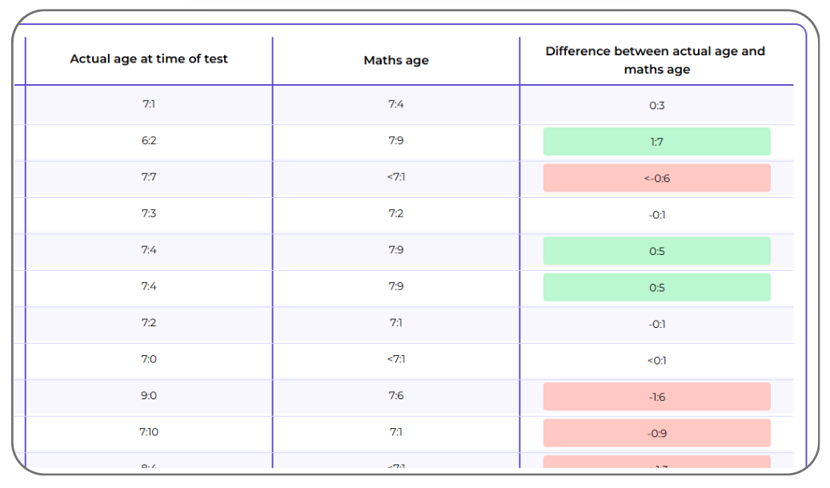
The Age Performance Review
View an annotated example of the Age Performance Review Report in Boost Insights: easily identify learners who are performing above, below or within their age expectations.
Hear from us
Curriculum changes. New materials. Price discounts and unmissable offers. We’ll make sure you don’t miss a thing with regular email updates, tailored by subject and age group.