Sign in for a more personalised experience
Unlock a more personalised experience to discover special offers, suggested products and more!
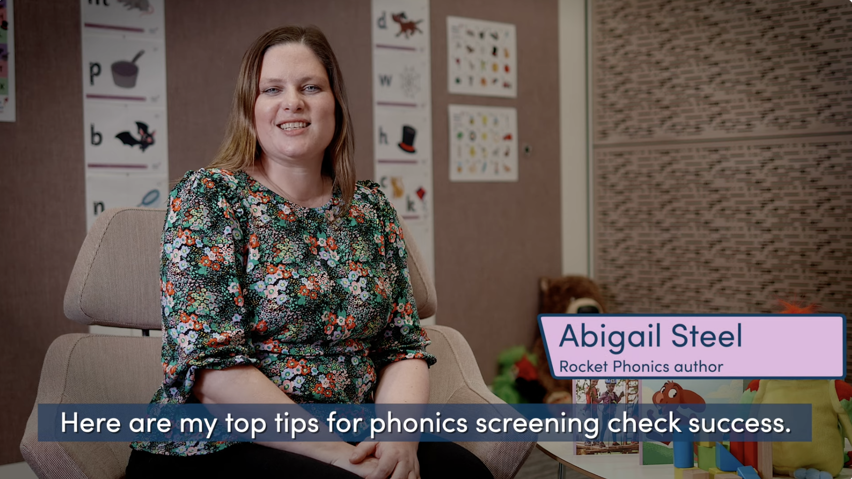
Sign inDon’t have an account? Click to sign up today!Top tips for phonics screening check success
1. Pair a reluctant/struggling reader with a more able/enthusiastic reading buddy for about 10 minutes, a few times a week sharing a Rocket Phonics Target Practice Reader book that focuses on the sounds we have been learning in class at that present time.
2. Play fun engaging games as a class where points can be earnt but possibly stolen by the other team: e.g. girls v boys, children wearing a jumper, children wearing a cardigan v those not, children on the left v children on the right etc. Select a letter sound, one team to collaborate to write the letter or letters that match the sound and a word that uses that sound. The other team/s to give a thumbs up or thumbs down if they’re correct/wrong. If wrong, another team has a chance to steal the point. Another favourite is to use a timer and time each group blending and reading words and play fun, engaging games on Boost such as Archery Speller. For Archery Speller, children all have a whiteboard and pen. We listen to the word, we sound out the word together then each child writes down their spelling for the word on their whiteboards. We all show our boards at the same time to check our spelling and we agree together on the correct spelling which I or a child uploads onto the IWB. Then we check this spelling on Archery Speller ensuring our imaginary arch is at the ready to shoot at the target on the IWB if we are correct. Phonics Play also has fun, engaging games such as Cheeky Chimps and Acorn Adventures which are great for alternative pronunciations.
3. Play musical alien words with digraphs needing extra practise. Lay cards out on the floor face down. Children move around the space. When the music stops, they pick up a card and read it out. The other children repeat the sounds. Keep going until everyone has had a few goes.
4. Carry out a couple of phonics screening check practice papers to familiarise children with the format, practice blending and consolidate what children already know. Make it fun by encouraging each child to select their favourite alien, the scariest one, the one with the most teeth etc. Assess their scores.
5. Assess which graphemes the whole class require more practice with following practice papers. These specific graphemes can then be recapped/revised with the whole class at the beginning of the next phonics lesson. We may look at words with these sounds and play a game such as reading the separate sounds in words and then blending. We may time how long this takes. Children then have a chance to beat their score. Can they read the words as whole words rather than blend and read? Can they beat their time?
6. Assess which graphemes require more practice following practice papers. Then create tailored interventions (we do precision teaching) for those individual children that may need extra support with these specific graphemes.
7. During the week of the check, make it as relaxed as possible for each child. Perhaps after the check they could have a squash and/or a biscuit with the teacher and a quick chat before returning to class.
Natasha is the Year 1 and 2 teacher at Wix and Wrabness Primary School based in Essex (UK). The school uses the Rocket Phonics SSP programme as its phonics provision. Written by expert and consultant Abigail Steel, Rocket Phonics is available for ages 3-7 with the following programmes:
-
Rocket Phonics First Steps for ages 3-4 in nursery/preschool
-
Rocket Phonics SSP programme for ages 4-6
-
Rocket Phonics Next Steps for ages 6-7
Hear from us
Curriculum changes. New materials. Price discounts and unmissable offers. We’ll make sure you don’t miss a thing with regular email updates, tailored by subject and age group.