Sign in for a more personalised experience
Unlock a more personalised experience to discover special offers, suggested products and more!
Sign inDon’t have an account? Click to sign up today!How to improve GCSE results with Adaptive Revise
You might know that a learner scored seven out of 10, but what does that really tell you?
- Did the style of question help them earn those seven marks, or cost them the other three?
- Did they misunderstand a concept, misread the question, or get it right without fully understanding why?
- Did they build on prior knowledge to reach that point, or is there still a gap in confidence or understanding?
1. GCSE knowledge coverage and depth
It’s simple enough to check if a learner can recall a fact or answer a short question correctly. But that surface-level success doesn’t always mean they’ve mastered the concept behind it.
True coverage data shows which areas of the course have been taught, revisited, and mastered, giving teachers confidence that no learner walks into their exam with uncharted territory still on the paper.
Schools that monitor both breadth (what’s been covered) and depth (how well it’s understood) can use adaptive GCSE revision to build fluency and confidence rather than last-minute cramming.
2. How well they know it: Metacognition and confidence
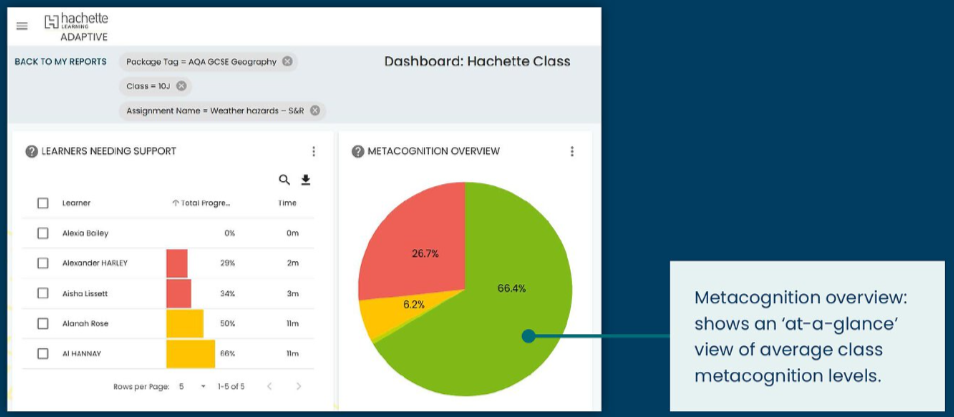
Metacognition is the mental mirror that lets learners judge whether their confidence matches reality.
It’s the awareness learners have of how their own learning works: knowing when they understand something securely and when they don’t.
A learner might feel sure about a topic because it feels familiar, yet deeper questioning reveals a shaky understanding. Another might lack confidence but show genuine mastery. Both need different support: one to rebuild accuracy, the other to build belief.
With a Metacognition Overview Report, found in Adaptive Revise, teachers can spot mismatches between confidence and competence, uncover misconceptions, and help learners become more accurate judges of their own learning. It’s one of the main drivers of the ‘intent’ behind GCSE revision planning aligned with Ofsted expectations.
3. How they're engaging: GCSE revision patterns
Engagement data shows how consistently learners revisit GCSE material and complete self-directed study. Reports that track time spent, last activity, and “at-risk” learners help teachers see who’s stayed active and who’s quietly dropped off in the past 30 days.
Patterns like these show whether learners thrive in self-directed study or need more structured guidance before GCSE study leave. When teachers can see where motivation dips, they can step in early to keep learning on track.
4. What they can do: Skill development and application
Skill-tracking data shows how well learners apply what they know through the exam practice questions, not just what they can recall. It highlights whether they're moving through simple recall to deeper thinking: analysing, interpreting, and evaluating ideas.
A learner might recall historical facts but struggle to explain their significance, or know a formula but misapply it in context. Seeing this distinction helps teachers plan next steps that build stronger, transferable understanding across subjects. It’s why Adaptive Revise is so powerful for GCSE revision, supporting learners and teachers through the two-year course.
5. How the bigger picture looks: Class and cohort trends
Cohort data reveals the bigger picture. It shows which GCSE topics or question types consistently challenge learners and where gaps between confidence and accuracy keep appearing.
This insight goes beyond intervention. It supports teacher development, moderation and shared planning, helping teachers spot patterns, strengthen teaching approaches and target effort where it makes the biggest difference next term.
6. Where they need support: Gaps in confidence and competence
Every teacher recognises the learner who says, “I get it,” but then hesitates when asked to prove it. GCSE competence gaps are visible; confidence gaps aren’t always.
When data separates the two, teachers can respond with precision. A learner who’s accurate but uncertain may need reassurance and stretch. One who’s confident but inaccurate needs GCSE intervention before misconceptions stick.
Seeing both sides means support is targeted, progress is authentic, and revision becomes genuinely effective. Schools that have effective GCSE revision strategies are aware of the importance of tracking both confidence and competence of a topic.
How Adaptive Revise helps teachers gather meaningful data
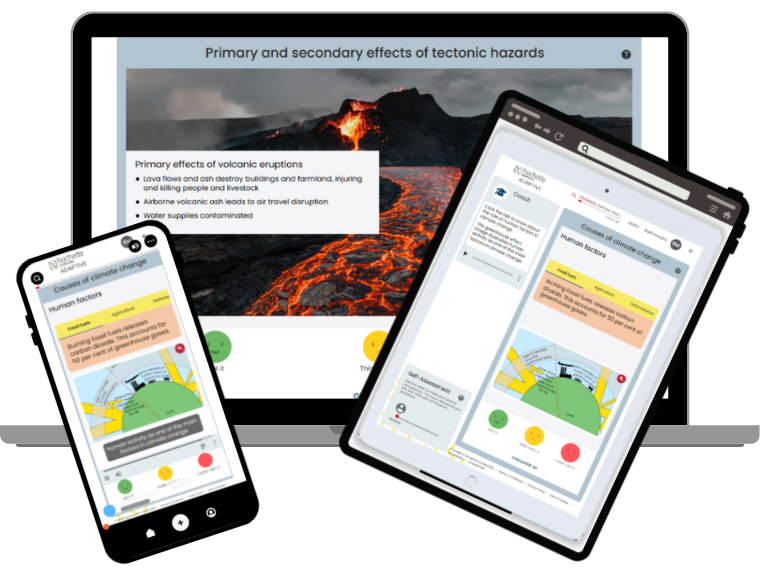
Adaptive Revise is an adaptive GCSE learning and revision platform. It combines cognitive science with real-time data insight to help teachers see how learning is progressing across topics, skills, and confidence levels, without adding to workload.
It gives teachers a clear, structured view of learner progress through four key reports: turning data into direction without extra admin.
- Group overview reports: give a snapshot of whole-class progress, engagement, and risk flags, showing who’s active and where attention is needed.
- Learner progress reports: track completion, time spent, and improvement per learner, identifying motivation, accuracy, and consistency patterns.
- Metacognition overview reports: reveal how learners think they’re performing versus how they actually perform, surfacing confidence gaps and misconceptions.
- Impact results reports: show how long it takes learners to reach proficiency and how accurate they are across question types, giving evidence of impact for department leads and the senior leadership team.
Together, these adaptive reports give a live picture of what learners know, how well they know it, and how they’re improving. Adaptive Revise supports evidence-based teaching that builds confident learners, lightens workload, and helps teachers focus their time where it matters most.
See how Adaptive Revise can help your school gather deeper insight and lighten the workload. Browse the educator demo or watch the short walkthrough video to see how adaptive data transforms GCSE preparation.
Written by Louise Jackson, Director of Chalkboard Content. Louise is an education copywriter with more than 10 years experience in teaching and senior leadership. She writes for Hachette UK’s education audience, translating real-life school challenges into clear, actionable guidance for teachers and leaders.
Hear from us
Curriculum changes. New materials. Price discounts and unmissable offers. We’ll make sure you don’t miss a thing with regular email updates, tailored by subject and age group.